
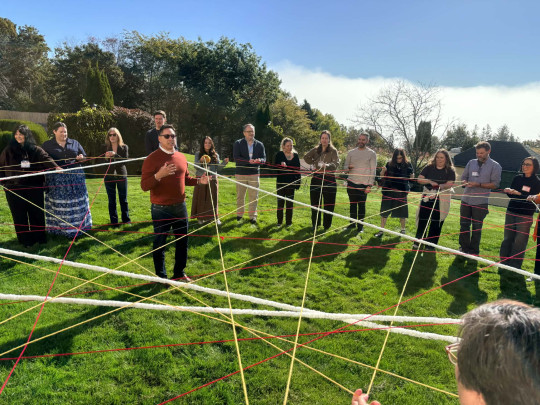
"It started off as a pain discussion, and it's turned into a healing discussion," explains Dr. John Sylliboy, Indigenous Scientific Director for the Atlantic Indigenous Children's Healing research initiative and Chronic Pain Network
Sylliboy and Dr. Margot Latimer, Dalhousie Professor, IWK Department of Pediatrics and Canadian Institutes of Health Research Chair in Indigenous Health Nursing for Nova Scotia, have spent years working alongside Mi'kmaw communities, Elders, knowledge carriers, clinicians and researchers to better understand the health experiences of Indigenous children and families. That work has grown into a research program that is improving access to care, advancing cultural safety and creating community-led solutions across Nova Scotia.
Inspired by Mi’kmaw scholars and Elders, Albert and Murdena Marshalls’ principles of Etuaptmumk or Two-Eyed Seeing the team sees research as a way of honouring treaty relationships through partnership, reciprocity and respect and integrating L’nu knowledge, while respecting the Western frameworks for research and care .
"Our research has been founded in honouring that treaty process," says Latimer. "Honouring treaty relationships is the way we do our work, and partnerships like these are a way that non-Indigenous folks can do their part for treaty relations"
Community members, Elders, knowledge carriers, clinicians and researchers help identify priorities, shape projects and develop solutions together. The approach recognizes that knowledge exists in many forms and that meaningful change happens when Indigenous and Western perspectives come together through Etuaptmumk.
For Sylliboy, the work reflects the spirit of the Peace and Friendship Treaties and the shared responsibility they represent.
"It's always been about a co-developing journey. Co-developing knowledge, awareness, and education." he explains. "It's not an Indigenous responsibility. It's not a Mi'kmaw responsibility. It's everyone’s responsibility."
One of the partnership's earliest discoveries came through research exploring pain among Indigenous children.
Working with children, families and communities, the team found there is no direct word for "pain" in the Mi'kmaw language. The finding highlighted an important gap between Indigenous experiences and the ways Western health-care systems often assess and discuss pain. Etuaptmumk guided the process and what emerged from those conversations was a simple but important realization: children needed a different way to tell their stories.
The team developed the Kids Hurt App, a bilingual tool available in Mi'kmaw and English that helps youth communicate their experiences through storytelling, visuals and culturally relevant tools. Features such as the Jar of Hurt were developed after researchers learned that traditional pain-rating scales were not always meaningful for children and families.
The app reflects the principle Etuaptmumk , bringing together ways of knowing to help children, families and health-care providers better understand one another.
The conversations about pain also raised broader questions about access to care. When the team examined health-utilization data, they found that Mi'kmaw children and youth experienced higher rates of 10 of the 13 pain-related conditions studied, yet were less likely to receive referrals to specialist care.
The findings highlighted opportunities to improve how children and families access health services and helped identify areas where community-based solutions could make a meaningful difference.
One of those areas was ear health. Working with community partners, like Sharon Rudderham (Tajikeimɨk Health) and Karlee Francis (Eskasoni Health Director) the IWK and Hearing and Speech Nova Scotia, the research team identified significant gaps in access to ear, nose and throat services. Chronic ear infections can affect hearing, speech development, learning and social development, yet many families faced barriers accessing specialist care.
The result was the development of a community-based ENT clinic in Eskasoni, bringing services closer to home and helping children access care earlier and more easily.
"Hearing and Speech Nova Scotia has been a really strong partner in helping us understand what services need to be in place to meet the standard of care," says Latimer.
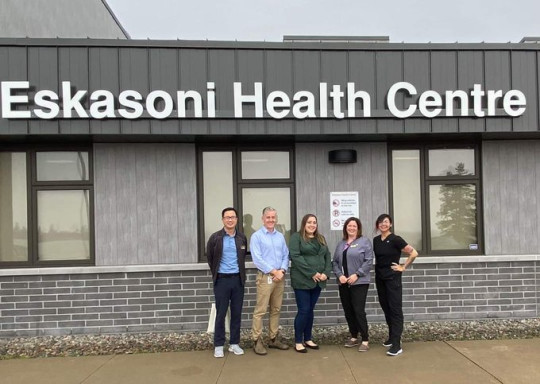
The clinic is the result of a broad partnership that includes community leaders, researchers, Hearing and Speech Nova Scotia, IWK Health and the IWK Foundation, whose support helped advance the work from research findings to a community-based solution.
"Opportunities such as the community ENT clinic can exist when communities and health systems partner and work together to achieve better outcomes, such as the success of the ENT clinic."
Today, IWK specialist Dr. Paul Hong and a network of partners are bringing ENT services directly into community, reducing barriers for families and helping children access care closer to home.
The work continues to grow through partnerships with leaders including Dr. Katie Glode, Scientific Director of a new Research NS funded Etuaptmu’k W’loti initiative, and Dr. Brent Young of Wije'winen Health Centre. Alongside IWK collaborators such as Dr. Katie McDonald and Maureen Brennan, the team is expanding its work into areas including oral health, mental health and community-led health services.
The partnership is also creating opportunities for community members to lead and shape future research. Julie Francis, Tajikeimɨk Health Director of L’nu Nursing, is now completing her PhD, reflecting the project's commitment to developing Indigenous researchers and leaders who can continue to shape the future of health care and health research. Francis is one of several community members whose involvement in the project has opened pathways into research, graduate education and leadership, modelling research pathways within communities while ensuring community knowledge remains at the centre of the work
"There is an assumption that capacity building only flows one way," says Latimer. "But communities build capacity in us as well."
Beyond community-based research projects, the partnership has grown nationally, as part of the CIHR Chronic Pain Network which has contributed to changes across the health-care system. Working with communities and health-system partners, the team developed a six-module cultural safety course for health-care providers that supports greater understanding of Indigenous experiences, trauma-informed care and culturally safe practice.
Grounded in Treaty relationships and guided Etuaptmumk, the partnership demonstrates how research can become more than a process of generating knowledge. Through collaboration, trust and shared learning, it has become a pathway to healing.
That journey has been made possible by a growing network of community members, Elders, knowledge carriers, researchers, clinicians and health-system partners. Sylliboy and Latimer acknowledge contributors including Dr. Frank MacMaster, Michael Sangster, Stacy Burgess, LeeAnn Larocque, and Tajikeimɨk Director of the Mi’kmaw Nurse Midwifery program and MScN student Courtney Pennell and many others whose leadership, guidance and support have helped shape the initiative over the years.
The community trusts in the process because it is all about respectful relationships and activated partnerships,
For Margot Latimer, John Sylliboy and their many partners, that healing continues to grow, shaped by the relationships that make the work possible