
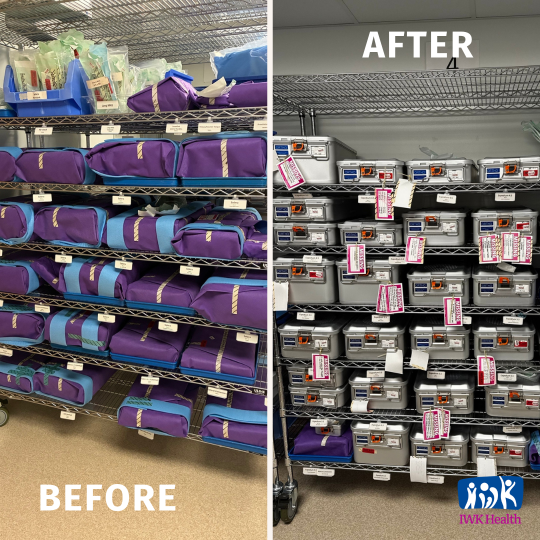
At IWK Health, a transformational shift is underway, one that strengthens patient safety, supports staff, and reduces environmental impact. The move to reusable rigid sterilization containers across surgical and clinical areas is a strategic investment in IWK Health’s financial sustainability, environmental leadership, and commitment to delivering the safest possible care.
For decades, the IWK relied on disposable blue wrap to protect surgical instruments. While familiar, the system was fragile: even a pin‑sized tear could compromise sterility, forcing instruments to be reprocessed and sometimes delaying or cancelling surgeries. These disruptions carry real costs for patients, for staff workflows, and for the organization’s resources. Blue wrap also generates significant waste, contributing to large emissions and undermining long‑term sustainability goals.
The introduction of rigid sterilization containers marks a decisive step forward. Made from durable aluminum and designed to last 15 years or more, the containers create a sealed, tamper‑evident barrier that better protects instruments during sterilization, transport, and storage. From a sustainability perspective, they offer an extraordinary advantage: compared to disposable wrap, rigid containers are associated with 84 per cent lower environmental costs across production, transportation, and disposal. Financially, their long lifespan and reduced reprocessing demands translate into meaningful long‑term savings.
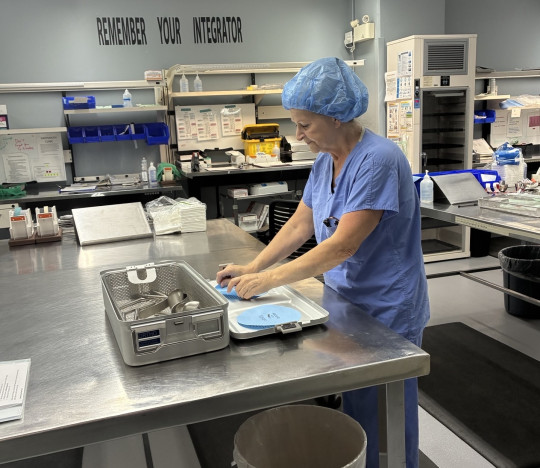
The scale of the initiative reflects the organization’s commitment to doing this right. Over several months, Medical Device Reprocessing (MDR) and Operating Room teams partnered closely with the vendor to identify the best solution for IWK Health. The final order, 1,216 containers across 22 models and supported by nearly 7,000 components including baskets, lids, filters, mats, and identification tags, represents a comprehensive sterilization modernization effort.
Rollout began in May 2026 with Women’s Gynecology OR and Clinic services and is continuing across all operating rooms and fourteen clinics and inpatient units. Once fully implemented, the system will touch nearly every corner of the organization.
The benefits are wide‑ranging and deeply aligned with the triple bottom line:
- Patient care: fewer compromised sets, reduced contamination risk, fewer surgical delays, and better protection of delicate instruments.
- Staff experience: more consistent workflows, fewer rewraps, reduced flash sterilization, improved ergonomics, and less waste to manage.
- Environmental impact: an estimated 3,500–4,500 kilograms of waste diverted annually, roughly the weight of a young African elephant or two SUVs, dramatically shrinking IWK Health’s waste and environmental footprint.
This project demonstrates what healthcare can achieve when environmental responsibility, financial stewardship, and high‑quality patient care are treated as interconnected priorities rather than competing ones. By investing in reusable sterilization containers, IWK Health is building a safer, more resilient, and more sustainable system, one that protects patients today while safeguarding the planet and resources needed for tomorrow.
October 11 -17 we are celebrating Medical Device Reprocessing (MDR) week. A special time to recognize the incredible work our MDR team does each and every day to keep our patients and staff safe. Our MDR professionals are the heart behind the scenes; ensuring that every instrument used in care is clean, sterile, and ready to go. Their attention to detail, dedication, and teamwork make an enormous difference in the quality and safety of the care we provide across the IWK.