
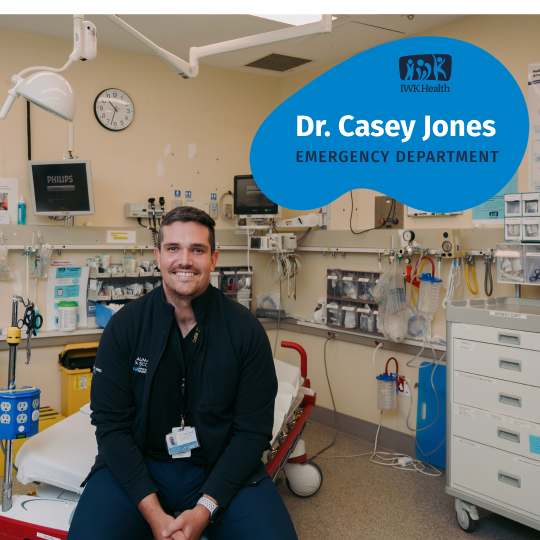
Photo by Ryan Wilson IWK
Anyone who has visited a pediatric emergency department knows that some days are busier than others. But new research suggests that it isn't simply the number of patients that affects wait time, it's also the severity of the illnesses and injuries arriving at the door.
A recent study on 10 years of visits to the IWK emergency department examined how caring for children with life-threatening conditions influences the flow of an entire pediatric emergency department. Researchers found that when high-acuity patients—those requiring immediate, intensive medical attention—arrive, the effects ripple throughout the department.
The reason is simple. Caring for a critically ill child often requires an entire team of physicians, nurses, respiratory therapists and other specialists working together, sometimes for hours. Equipment, treatment rooms and staff are quickly redirected to provide lifesaving care, leaving fewer resources available for other patients.
“One strength of our study is that we combined emergency department visit data, with perspectives of frontline staff in the ED (nurses, doctors, unit clerks, security),” says Dr. Casey Jones, PGY-4, Emergency Medicine Resident at IWK and QEII. “Numbers can tell us what is happening, but the people delivering care every day provide important context about why it happens, and where improvements can be made.”
While emergency departments are designed to prioritize the sickest patients first, staff described the constant balancing act required to continue caring for everyone else waiting to be seen.
Researchers found that high-acuity cases can contribute to longer wait times and slower patient flow, particularly during already busy periods. Staff also described how these events create a domino effect throughout the department as rooms remain occupied longer, consultations take additional time, and healthcare teams shift their attention to urgent care needs.
“The biggest surprise was that trauma team activations themselves didn't appear to significantly slow patient flow,” says Casey. “We often think of trauma cases as being among the most disruptive events in an emergency department because they involve so many people and resources. Instead, it was the non-trauma CTAS-1 (high acuity patients like respiratory arrests, seizures, etc.) resuscitations that were associated with longer time-to-doctor for other patients.”
Despite these challenges, the study also highlighted the resilience and adaptability of emergency department teams. Staff routinely reorganize workloads, support one another and adjust priorities in real time to ensure every child receives safe, appropriate care.
The findings reinforce an important message for families: a longer wait in the emergency department does not necessarily mean the department is overcrowded or operating inefficiently. Sometimes it means a child is receiving lifesaving treatment behind closed doors.
Understanding how high-acuity cases affect emergency department operations may help hospitals better plan staffing, improve patient flow and develop strategies to reduce delays while maintaining high-quality care for the sickest children.
For parents waiting with a child whose condition is less urgent, it can be frustrating not knowing why progress seems to slow. Studies like this provide valuable insight into the complex decisions being made every minute and highlight the dedication of healthcare teams working to care for every child who comes through the emergency department doors.
“We hope this work encourages further research into how emergency departments can deliver timely, high-quality care for critically ill children while maintaining safe and efficient care for everyone else in the department,” says Casey.